


The Trade Deal That Could Redraw Fashion's Supply Map
Why the US-India tariff framework may accelerate fashion's shift away from China
Trade agreements rarely capture the imagination of the fashion industry. They are typically technical, slow-moving and buried in policy language. But the latest tariff framework between the United States and India has the potential to reshape one of the most important parts of the fashion business - where clothes are actually made.
Under the new outline, the US has agreed to lower tariffs on Indian goods to an effective rate of 18%, down from 50%. In return, India will increase imports of American products and reduce trade barriers across several sectors. The immediate winners are clear. Apparel exporters, footwear manufacturers and jewellery producers, industries built on labour-intensive production, stand to gain the most.
For fashion brands, however, the implications run deeper than lower duties. The agreement reinforces a broader structural shift already underway across the industry - the gradual redrawing of the global supply chain away from China.

By Ridhi Sofat
February 2026
The Deal Explained

The interim trade framework between the United States and India centres on a significant reduction in tariffs on Indian exports, particularly in labour-intensive sectors such as apparel, footwear and jewellery. Under the new terms, US duties on Indian goods will fall to an effective rate of 18%, down from as high as 50%, easing a major cost burden for exporters and their global clients. In return, India has agreed to purchase $500 billion worth of American goods and remove trade barriers on selected US products, including agricultural and manufactured items.

For fashion, the agreement offers immediate relief to suppliers working with companies like Walmart and Ralph Lauren, many of whom had been absorbing tariff costs to maintain contracts. The result is a more predictable trade environment at a time when brands are actively restructuring their supply chains.
The China+1 Moment
For most of the past three decades, China has served as the backbone of global apparel production. Its infrastructure, speed and scale made it the default manufacturing hub for brands across price points. But rising labour costs, geopolitical tensions and tariff uncertainty have pushed companies to rethink that dependence.
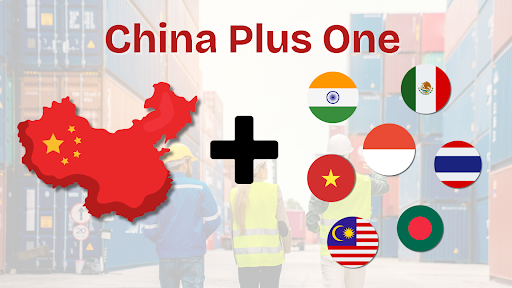
The strategy that emerged is often described as “China+1", which is the idea that brands should keep some production in China while building parallel capacity in other countries. India has long been a contender for that role, but structural challenges, from infrastructure gaps to tariff complexity, slowed its ascent.
The new US–India framework changes that equation. By lowering tariff uncertainty and improving cost competitiveness, it positions India more clearly as a viable alternative for large-scale apparel and footwear production.
Financial markets reacted accordingly. Indian equities surged, the rupee strengthened, and asset managers pointed to the country’s improved standing in global supply chains. In other words, investors see a rebalancing of production geography.
Why Fashion Benefits First

Unlike industries built on automation or advanced manufacturing, apparel and footwear remain heavily dependent on human labour. That makes tariffs and wage differences especially consequential.
Indian exporters, many of whom supply major Western brands, had been absorbing high tariffs to maintain contracts. With the effective rate now reduced, that pressure eases. Suppliers to companies like Ralph Lauren, Gap and Walmart are expected to see improved order flows and margins almost immediately.
For brands, the advantage works in two ways.
First, lower tariffs simply make costs easier to predict. When duties are high or constantly changing, brands either have to absorb the expense or pass it on to customers. A more stable tariff rate allows companies to plan pricing, production and margins with greater certainty.

Second, the deal gives brands more flexibility in where they manufacture. For years, many fashion companies relied heavily on China because of its scale and efficiency. But trade disputes, political tensions and rising costs have made that concentration risky. If one region faces tariffs, sanctions or disruption, the entire supply chain can be affected.
By making India more competitive, the agreement gives brands another viable production base. Instead of depending on a single country, they can spread manufacturing across multiple regions. In today’s climate, that kind of diversification is no longer just a cost-saving tactic, but a form of risk management.
What It Means For Luxury
At first glance, the shift may appear more relevant to mass-market retailers than to luxury houses, many of which produce core goods in Europe. But the luxury supply chain is more complex than the marketing suggests.

Entry-level accessories, textiles, packaging, and certain ready-to-wear components are often sourced across Asia. Even when final assembly happens in Italy or France, upstream materials frequently travel through global production networks.
As a result, changes in tariff structures and sourcing geographies ripple upward through the entire industry. Lower costs and greater supply chain stability can influence pricing, margins and product strategy, even for high-end brands.
India's Strategic Opening
The timing of the deal is significant. China’s dominance in apparel manufacturing is gradually eroding, while Western brands look for politically and economically stable alternatives.
India offers several structural advantages: a large labour force, an established textile sector and a government eager to attract global production. With tariff uncertainty reduced, those strengths become more compelling.

For India, the agreement is not just about lower duties, but about repositioning itself within the global fashion economy. Reduced US tariffs make Indian apparel and footwear more competitive against rival manufacturing hubs, strengthening the country’s role in the “China+1” strategy many brands now follow. Increased orders from companies like Walmart and Ralph Lauren support employment across labour-intensive sectors, while more stable trade terms could attract foreign investment into factories, logistics and infrastructure.
Over time, the deal helps shift India’s image from a low-cost sourcing option to a more strategic manufacturing partner in the global supply chain.
A New Geography of Production
Trade deals rarely change fashion overnight. Supply chains are slow, complex systems built over years of relationships and infrastructure investment. But they do send signals - and the signal from this agreement is clear.
India is moving into a stronger position in the global manufacturing hierarchy, just as brands are searching for alternatives to China. That convergence matters.

Fashion’s production map has always been shaped by economics, politics and labour. With this latest agreement, the balance between those forces is shifting again. And as brands redraw their sourcing strategies, the next centre of gravity may lie not in Shanghai or Shenzhen, but increasingly in Mumbai, Delhi and beyond.
In an industry where margins are tight and risks are global, the most important fashion story is often the one unfolding far from the runway.


Comments