


Fashion’s New Axis
How Asia and the Middle East are quietly redrawing the industry’s power map
Fashion has long revolved around a familiar geography. Paris sets the tone, Milan refines it, New York commercialises it. For decades, the creative centres of the industry were also its strategic ones.
But the past few seasons have suggested a quieter shift. Power is no longer concentrated in a single axis. Instead, it is spreading across a new map that runs through Seoul, Shanghai, Mumbai and, increasingly, Dubai.
This realignment was on display at the latest Dubai Fashion Week, where designers from India, Vietnam and across Southeast Asia joined Middle Eastern brands on the runway. The event, once a regional showcase, is positioning itself as a commercial bridge between Asia, the Middle East and Western markets. It reflects a broader industry reality. While Europe still dominates fashion’s image, Asia and the Gulf are becoming central to its growth, production and capital.

By Ridhi Sofat
February 2026
Dubai: The New Gateway
Dubai Fashion Week’s organisers have made their intentions clear. The event is now focused on “strengthening the bridge between designers and retailers” and reinforcing the city’s role as a gateway between regional creativity and global markets.

This season, Indian couturier Manish Malhotra shared the schedule with Vietnamese labels L’Scarlett and Soramame, alongside designers from Saudi Arabia, Lebanon and the UAE. Southeast Asian brands, once absent from the calendar, are becoming regular participants.

This is not simply about cultural diversity. It is about positioning Dubai as neutral commercial territory: a place where Asian designers can access Western buyers, and where Middle Eastern capital meets global fashion talent.
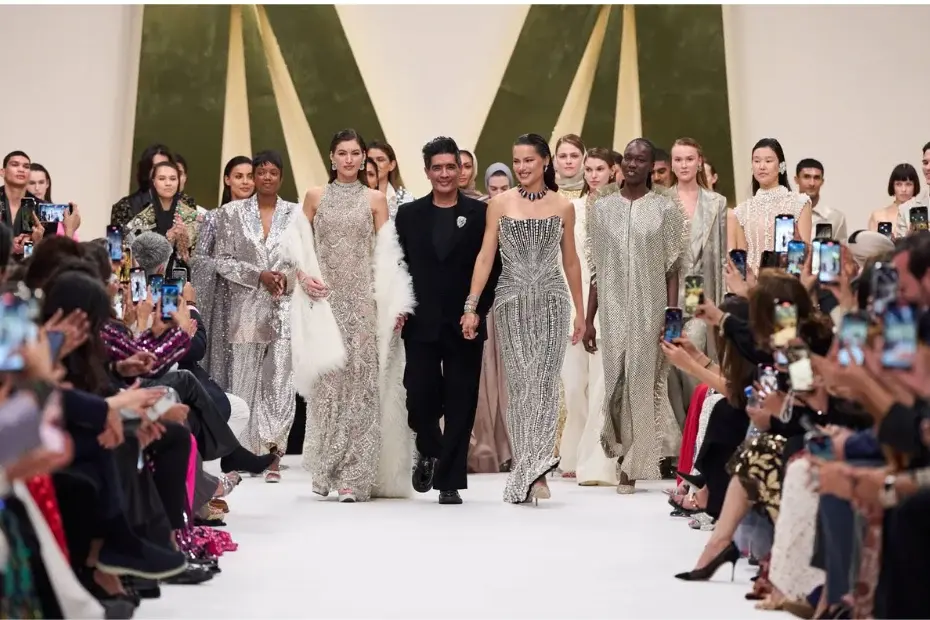
Unlike Paris or Milan, Dubai is not defined by heritage houses or century-old ateliers. Its advantage lies elsewhere, in logistics, investment and geography. Sitting between Europe, Asia and Africa, it offers something the traditional fashion capitals cannot: proximity to the industry’s fastest-growing consumer markets. In this sense, Dubai is not trying to compete with Paris. It is trying to connect the markets that matter most to fashion’s future.
Asia Moves From Factory to Fashion Power
At the same time, Asia’s role in the industry is evolving. For decades, it was primarily seen as fashion’s production base. Now, it is becoming a creative and commercial force in its own right.
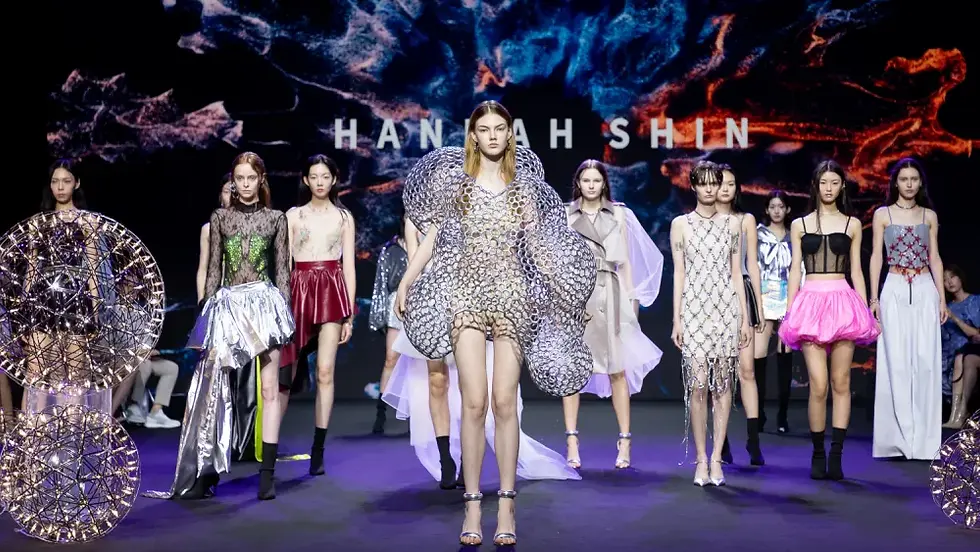
Seoul Fashion Week offers one example. The latest edition streamlined its shows into a single venue, focusing on efficiency and buyer engagement. More than a hundred international buyers attended, reflecting growing interest in Korean brands. As one industry executive noted, K-fashion is no longer an emerging story; it is poised to become the next global chapter in Korea’s cultural influence.

China is moving in a similar direction. The parent company of Chinese fashion label Icicle is reportedly preparing for an IPO in either Hong Kong or Paris, signalling ambitions to expand internationally. Once known mainly as a manufacturing hub, China is now producing brands that want to compete on the global luxury stage.

India, meanwhile, is gaining ground as both a manufacturing and commercial powerhouse. A new trade framework with the United States has reduced tariffs on Indian goods, strengthening the country’s position in global apparel and jewellery supply chains. At the same time, domestic players like Kaylan Jewellers are reporting strong growth, driven by local demand.
Together, these developments point to a broader shift. Asia is no longer just where fashion is made. It is increasingly where it is designed, financed and consumed.
Trade Deals Are Redrawing the Map
Policy changes are reinforcing this geographic realignment. Across multiple regions, trade agreements are quietly reshaping the flow of fashion goods.
The recent US–India tariff framework lowered duties on many Indian exports, offering relief

to apparel and jewellery suppliers and strengthening India’s appeal as a manufacturing alternative to China. At the same time, the European Union has expanded its trade agreement with Vietnam, another major sourcing hub for textiles and footwear.

In the Western Hemisphere, new agreements with countries like Guatemala and Haiti aim to stabilise regional supply chains and reduce reliance on Asian production. These deals are designed to strengthen local manufacturing ecosystems while providing brands with more diversified sourcing options.
The industry is no longer organised around a single dominant production centre. Instead, it is becoming a network of regional hubs, each connected through trade policy, logistics and investment.
A New Fashion Geography
The traditional fashion capitals still matter. Paris, Milan and New York remain the industry’s symbolic centres, shaping taste and setting the creative agenda.
But the commercial map looks different.

Production is shifting toward India and Vietnam. Cultural influence is radiating from Seoul and Shanghai. Investment and retail expansion are flowing through the Gulf. And cities like Dubai are positioning themselves as the connectors between these emerging poles.

What is taking shape is not a new capital, but a new axis, one that runs east and south rather than west and north.
In this emerging geography, fashion is no longer defined by a single centre of gravity. It is shaped by a network of markets, supply chains and cultural hubs, each pulling the industry in a different direction.

And increasingly, the future of fashion may be decided not just in Paris showrooms, but along the routes that connect Seoul, Mumbai and Dubai.


Comments