


Paris Men's Fashion Week 2026
Paris Men’s Fashion Week has never been short on spectacle, but this season’s shows revealed something more deliberate than provocation. Beneath the colour, the skirts, the layered tailoring and the celebrity front rows, a quieter recalibration is taking place, one that speaks less to shock value and more to how luxury menswear is repositioning itself in a fractured cultural moment.
The question no longer seems to be what men can wear, but who fashion is prepared to dress, and at what cost.
By Ridhi Sofat
January 2026
Beyond Quiet Luxury
For several seasons, menswear has been dominated by the language of “quiet luxury”: neutral palettes, discreet tailoring, clothes designed to disappear rather than announce themselves. That era is now being gently but decisively challenged.

At Louis Vuitton, Pharrell Williams pushed colour and texture without abandoning wearability. Earthy browns, gradients and tactile knits suggested warmth rather than flamboyance, while the house’s monogrammed leather accessories grounded the collection firmly in commercial reality. The message was clear: expression and timelessness are not mutually exclusive.


Elsewhere, Auralee, Amiri and Ami Paris used colour in a controlled
way, introducing reds and warmer tones without disrupting the structure of classic menswear. The clothes remained recognisably tailored and wearable, but avoided the muted palette that has dominated men’s fashion in recent seasons.
The Gender Question Revisited
The most talked-about element of the week, skirts, fluid silhouettes, traditionally “feminine” fabrics, is not new. What has changed is the context in which these garments now exist.
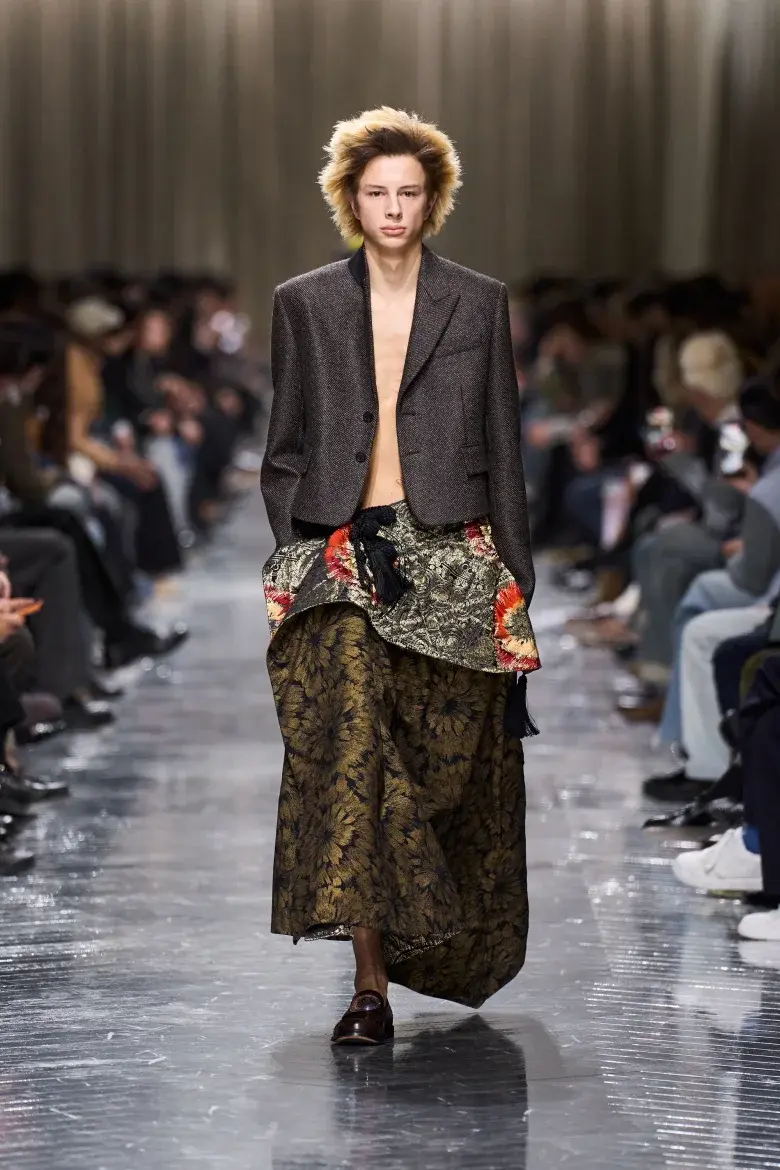
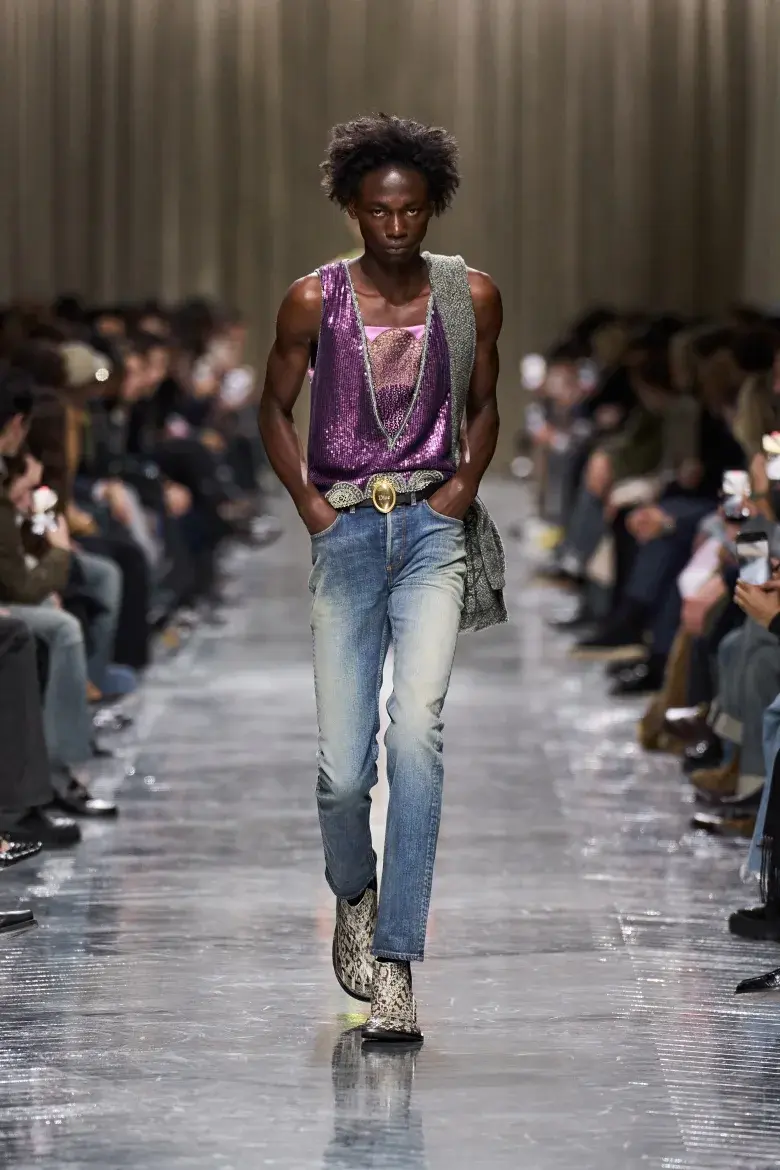
Designers are presenting gender-fluid propositions at a time when public discourse around masculinity has become increasingly polarised. Online reactions to men’s fashion over the past year have highlighted how sensitive debates around masculinity remain. Against that backdrop, Paris offered a counterpoint: not confrontational, but assured.
Dior’s second menswear collection under Jonathan Anderson captured this tension precisely. Drawing inspiration from Paul Poiret, Anderson mixed brocade skirts, velvet tailoring and relaxed proportions with familiar menswear codes.
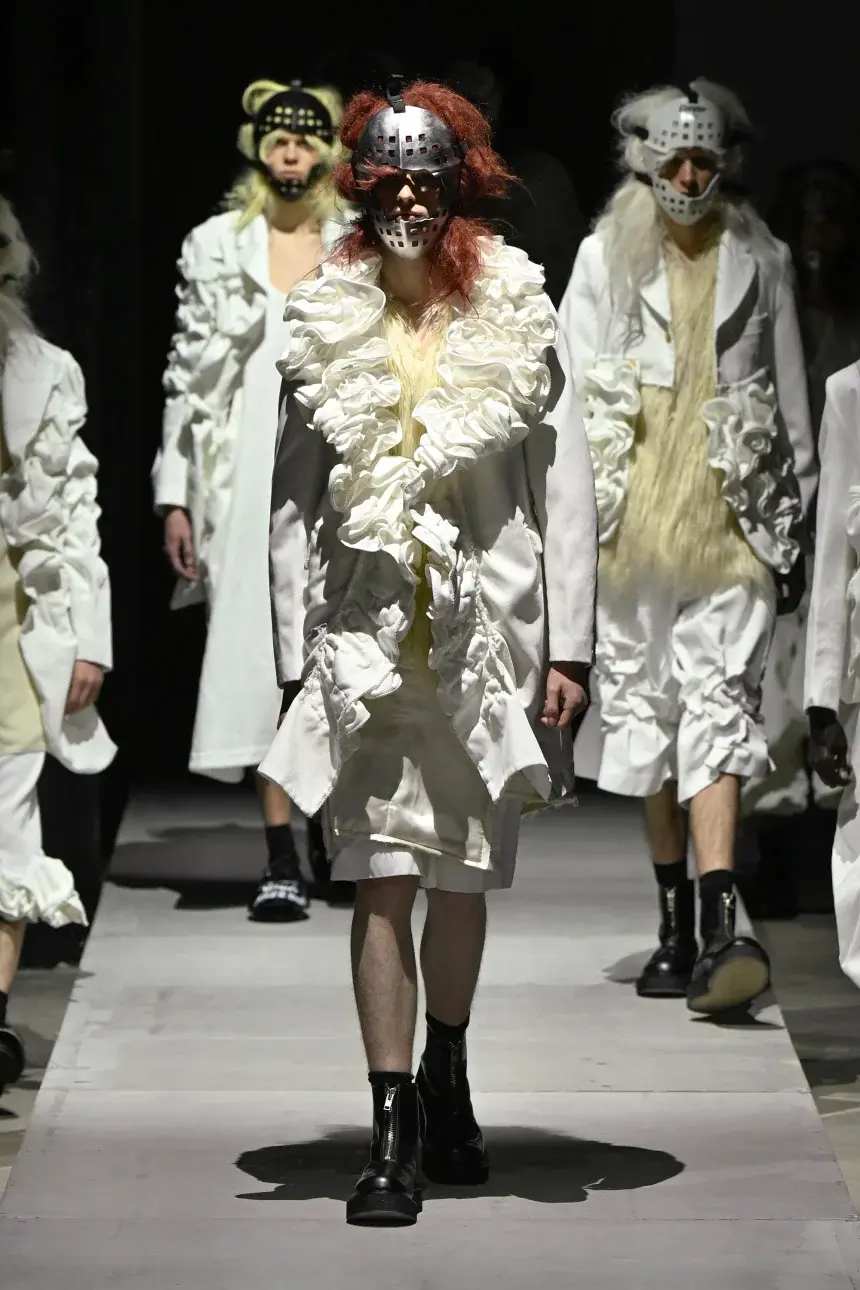
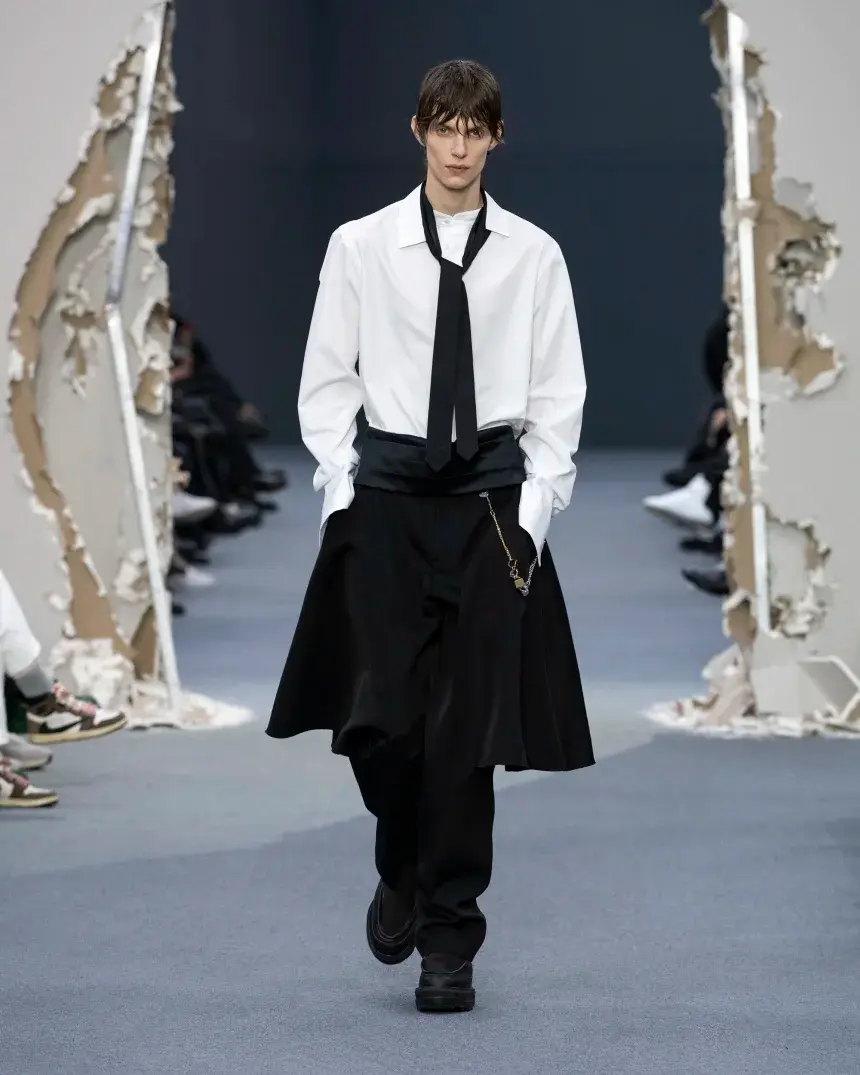
At Comme des Garçons and Sacai, experimentation was more explicit, but even there, the work felt less about provocation and more about questioning inherited structures. What is striking is how many brands now treat fluidity as a design parameter rather than a political statement.
Wearability Still Matters
Despite the headlines, Paris did abandon wearability and practicality. Brands like Lemaire and Hermès reminded the industry that innovation does not have to come at the expense of function.
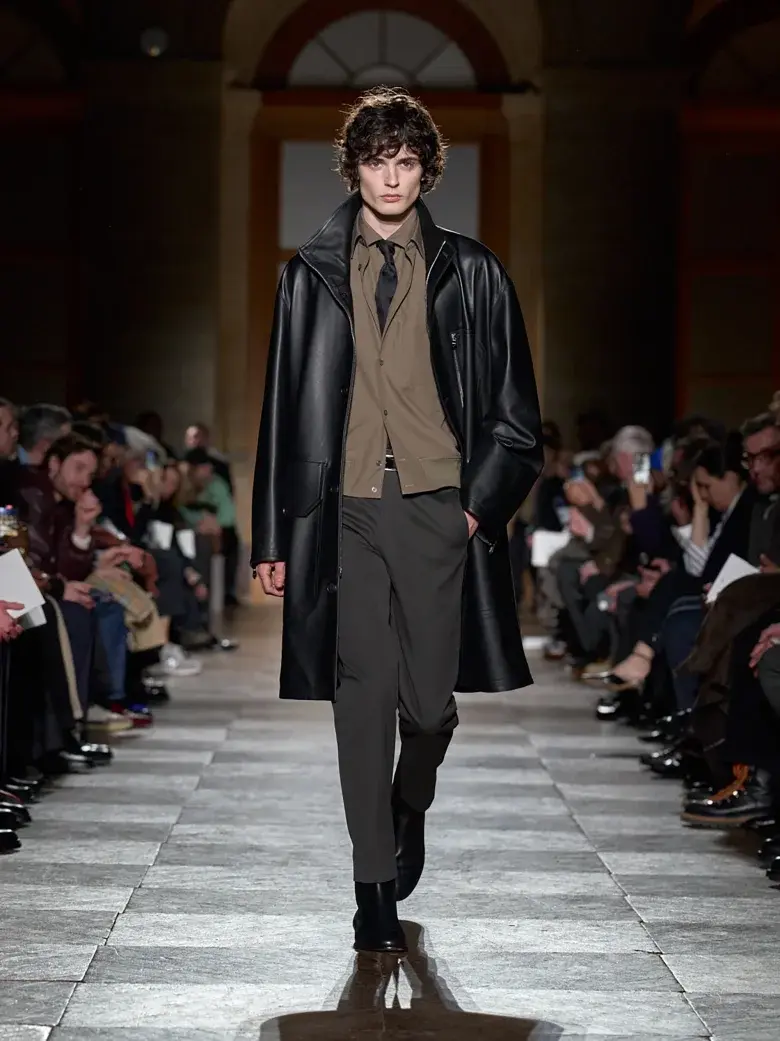
Hermès’ Fall–Winter 2026 show, Véronique Nichanian’s final menswear collection after 38 years, was a masterclass in continuity. The collection centred on leather outerwear and layered knits, designed to age well rather than date quickly. This reinforced the house's belief that durability and longevity are central to luxury, arguing that consistency itself remains a key competitive advantage.

Lemaire echoed this with sheepskin jackets and mohair suits intended for daily wear, prioritising comfort, durability and proportion over visual spectacle. These collections may not generate viral moments, but they reflect the kind of product-led consistency that sustains luxury menswear commercially.
What This Means For Luxury
Paris Men’s Fashion Week 2026 has been so important because it shows how luxury menswear is adapting to a more cautious, divided market. Rather than commiting to a single vision of modern masculinity, brands presented clearly differentiated propositions within the same season. Experimental silhouettes, colour and gender-fluid pieces appeared on the runway, while traditional tailoring, outerwear and familiar house codes remained firmly in place.
In a market where cultural reactions are increasingly unpredictable and consumer tastes diverge sharply, luxury brands are reducing risk by broadening their offer rather than narrowing it. Paris made clear that menswear’s future will not be defined by one dominant aesthetic, but by a controlled coexistence of innovation and continuity - spectacle on the runway, stability in the wardrobe.


Comments